
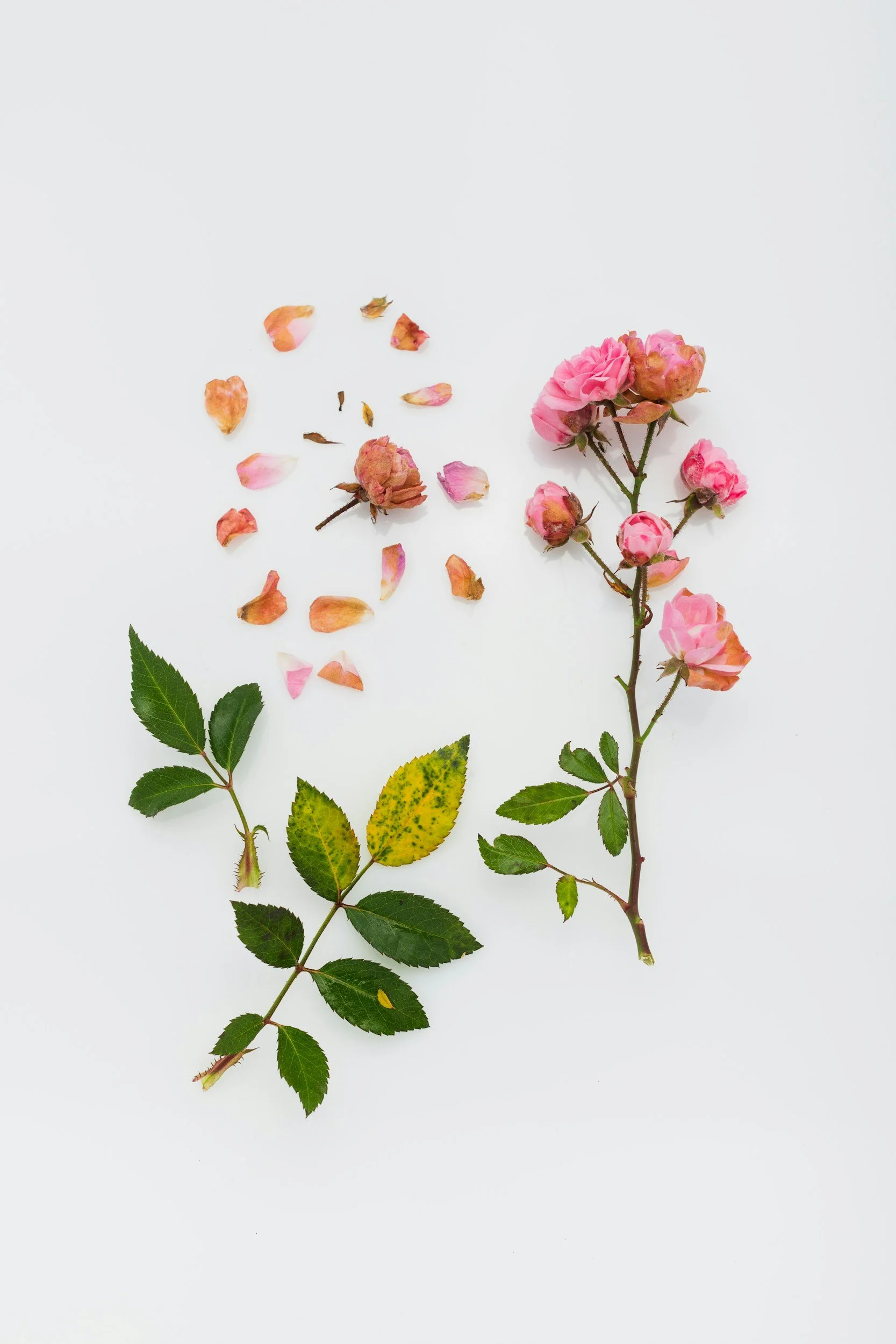
Pressing Flowers
Pressing flowers—whether whole or petal by petal—begins with selecting blooms at their peak and trimming stems and excess foliage to reduce moisture. For whole flowers, we gently open the blossom if needed so petals lie flat, then sandwich it between absorbent paper and heavyweight boards inside our customized flower press. For petal-by-petal pressing, separate petals are carefully arranged flat on blotting paper to prevent overlap. This process requires changing of papers regularly over several weeks until completely dry and crisp.
Reconstruction calls for patience and a clean workspace- craft glue and other adhesives are used to reassemble a bloom on a backing (glass, resin, or paper), starting from the center and layering outward to recreate depth and natural curvature.
Pressing flowers can alter petal color — pigments can fade, darken, or shift hue as moisture and light are removed during the drying process — and because this is a natural, unpredictable outcome we cannot be held responsible for color changes in preserved blooms. At Bloom and Board, we celebrate the organic beauty of pressed flowers but understand color consistency matters, so we offer an optional color correction add-on: our custom tinting and highlighting services can restore or adjust tones to better match your original blooms or desired palette.
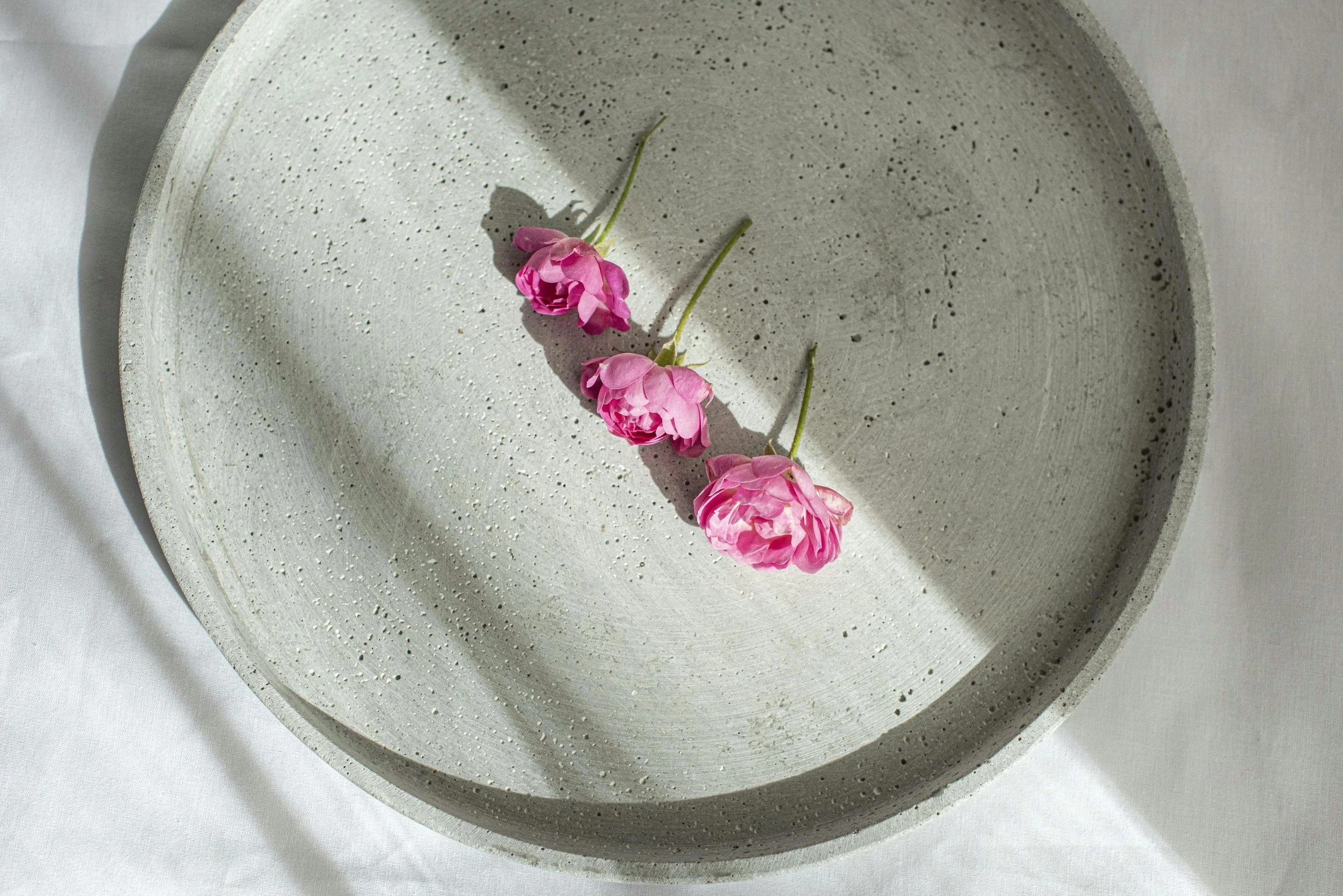
Epoxy Resin Pours
Epoxy resin pieces begin with careful preparation: flowers must be completely dry to prevent moisture and rot—silica-dried blooms work best. The workspace requires controlled temperatures to ensure proper viscosity and curing. Most large epoxy pieces are poured in thin, deliberate layers which is a time-consuming process. Each layer requires its own cure time (often 12–24 hours to be touch-dry and several days to fully cure depending on the formula), and once fully cured, pieces may need to be sanded to fix imperfections.